Ask Tristan
Learning about bees often raises new questions. Whether you're wondering about a swarm in your garden, trying to understand your first hive inspection, or simply curious about honey bees, Tristan is always happy to share practical advice drawn from years of real experience working with bees. No question is too simple.


Real Experience Matters
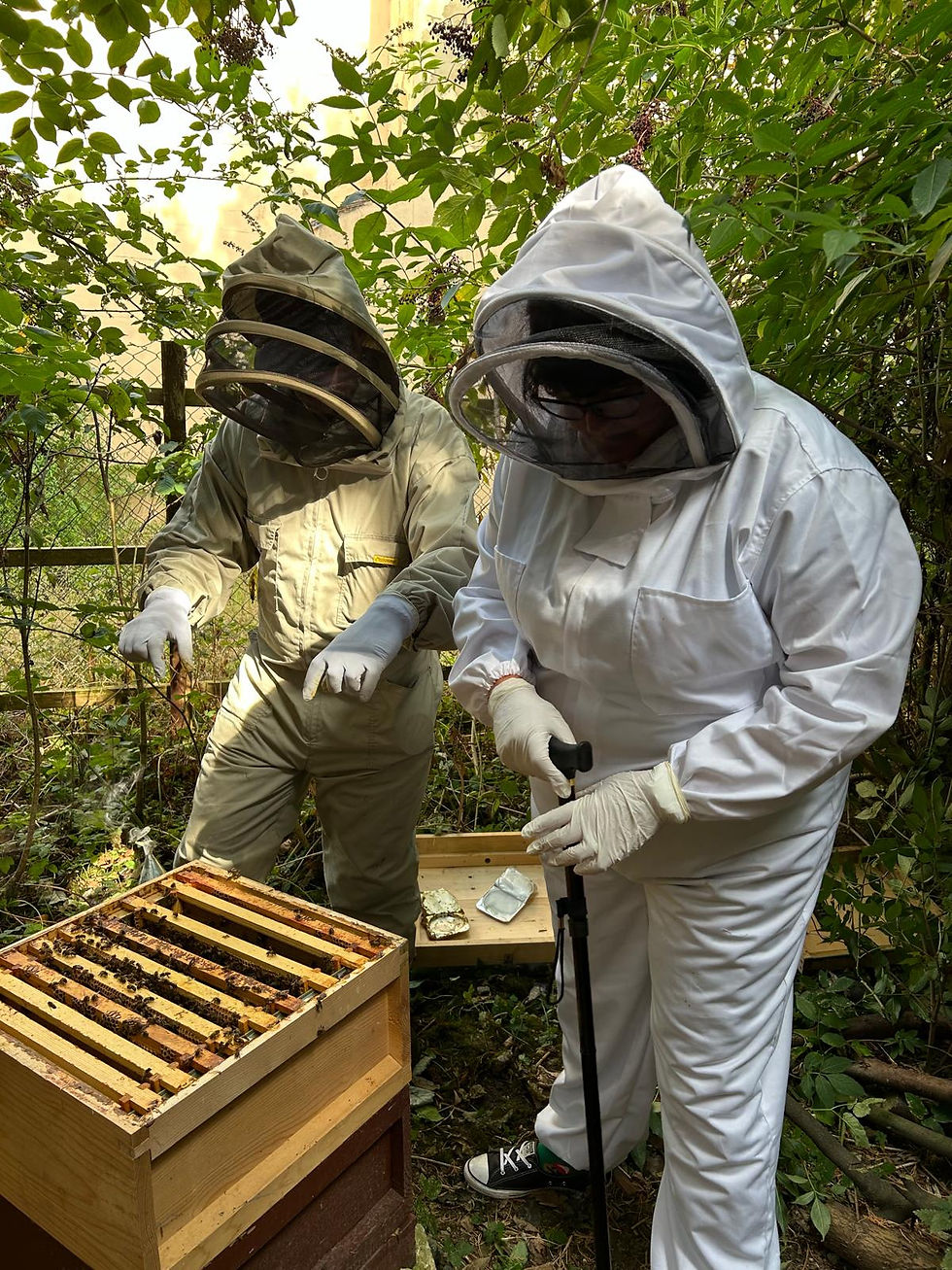
There are plenty of books about beekeeping. There are plenty of opinions online. What makes mentoring valuable is learning from someone who spends every season working with real colonies.
Tristan has relocated countless swarms, mentored new beekeepers and managed colonies through every season. His advice is always practical, honest and based on what actually happens inside a hive.
What You Can Ask
🐝
Understanding bees
- Hive behaviour
- Queen problems
- Swarming
- Forage
- Honey production
🧰
Equipment
- Choosing a hive
- Protective clothing
- Smokers
- Tools
- Extractors
🌸
Seasonal questions
- Spring inspections
- Summer management
- Autumn feeding
- Winter preparation
🍯
Honey
- Harvesting
- Cut comb
- Extraction
- Storage
- Crystallisation
📖
Beginner advice
- Starting beekeeping
- Choosing your first colony
- Finding a mentor
- First inspections
🚨
Swarms
- Is it a honey bee swarm?
- What should I do?
- Can Tristan collect it?
- What information is needed?
Frequently Asked Questions
How often should I inspect my hive?
Tristan can provide personal guidance on this topic based on your specific hive's health and the current season in Norfolk.
Why are my bees bearding outside?
Bearding is often a sign of temperature regulation. Tristan can help you assess if your colony needs more ventilation or if they are simply cooling off in the evening sunshine.
How do I know if my colony is preparing to swarm?
Look for swarm cells and increased activity. Tristan can guide you through a swarm inspection to identify these signs early.
Should I feed my bees?
Feeding depends on their stores and the time of year. Tristan's advice is based on what seasonal food sources are available locally in Norfolk.
Why isn't my queen laying?
There are many reasons for a non-laying queen. Tristan can help you troubleshoot the issue, from colony health to environmental factors.
Can I keep bees in my garden?
Most gardens can accommodate bees with the right placement. Tristan can advise on distance, fly-paths, and how to keep both your bees and neighbors happy.
How much honey will one hive produce?
Harvests vary wildly by year and location. Tristan can share what to expect based on typical forage in the Norfolk countryside.
What flowers are best for bees?
Bees love diversity. Tristan can suggest a range of native plants that provide nectar and pollen throughout the entire foraging season.
Before You Send
📷 Include photographs if possible.
📍 Include your location if asking about a swarm.
📝 Tell Tristan what you've already observed.
Ask Tristan
Tristan personally reads every question. While he may be out visiting apiaries or relocating swarms, every genuine enquiry is important and will receive a thoughtful response.

From Tristan's Notebook
One thing I've learned over the years is that bees nearly always have a reason for what they're doing. If you slow down, observe carefully and resist the temptation to panic, they'll usually tell you exactly what's happening.
Knowledge Hub FAQ Library
Wisdom from the Norfolk Hives
If you have a question about beekeeping, you're likely not the first to ask it. I’ve put together these answers based on years of working directly with colonies in the Norfolk countryside. I hope they provide the reassurance and practical steps you need to move forward with your bees.
I think I've found a swarm. What should I do?
First of all, don't worry. Honey bee swarms are naturally very calm when they're looking for a new home. Keep a respectful distance, keep pets inside, and watch them from a window if you can—it's a remarkable sight. If they're in a spot where they might cause a problem, the best thing is to let someone local know. You can submit the details on my Report a Swarm page, and I'll see what we can do to help.
+
How quickly should I report a swarm?
Swarms are transient; they might stay for a few days, or they might move on in twenty minutes. Because they’re exposed and vulnerable, I always suggest reporting them as soon as you spot them. The sooner we know, the better chance we have of safely gathering them before they settle somewhere tricky, like a chimney. You can keep an eye on our Seasonal Updates to see when swarming is most likely in our area.
+
Can you identify a swarm from a photograph?
I certainly can, and it helps immensely. Not every buzzing crowd is a honey bee swarm—often they’re bumblebees or wasps, which require different care. If you can safely take a clear photo from a distance, please do. You can find my guide on what to look for in the Knowledge Articles, or simply attach it to the form below.
+
Do I need to own bees before joining the Learning Hub?
Not at all. In fact, I’d encourage you to start learning before you buy a single piece of equipment. Understanding the rhythm of the colony and what a typical year looks like will help you decide if keeping bees is right for your lifestyle. My Learning Modules are designed to take you from a curious observer to a confident keeper, one gentle step at a time.
+
What equipment do I need for my first hive?
Starting simple is usually best. You’ll need a sturdy suit, a good smoker, a hive tool, and of course, the hive itself. But the most valuable 'tool' you can have is a curiosity for how the colony works. I’ve put together a starter checklist in our Downloads & Resources section that focuses on quality over quantity.
+
Do you offer one-to-one mentoring?
I do. There is nothing quite like standing by a hive with someone more experienced when you're first starting out. It builds confidence in a way that books simply can't. I offer tailored mentoring sessions for those who want that personal guidance. You can find more details about how these work within the Learning Modules area.
+
Still can't find what you want?
Every colony is different, and sometimes the best advice comes from discussing your own situation with an experienced beekeeper.
Whether you've discovered a swarm, are preparing for your first hive, or simply need a second opinion, Tristan is always happy to help.
Complete the form below with as much detail as you can. The more information you provide, the easier it will be for Tristan to offer practical guidance.
+
.jpeg)